Host race evolution in Phelipanche ramosa
Weedy parasites invade crops often with dire consequences for yield. The devastating effects of weedy parasites are aided by modern agriculture, notably the reduced genetic resources of monoculture crop resistance which are regularly circumvented by the parasite, and the inability to discriminate between crops and weedy parasites for mass eradications. Phelipanche ramosa is a weedy parasite with a broad geographic distribution that attacks a diverse range of dicotyledonous crops. The species has been documented to regularly invade new crops, and quickly overcome defense mechanisms of resistant crop varieties. As a postdoc, I investigated the distribution of genetic diversity and host preference of P. ramosa across the Mediterranean basin with the goal to understand its evolutionary history and identify factors that lead to the emergence of new host races in western France.
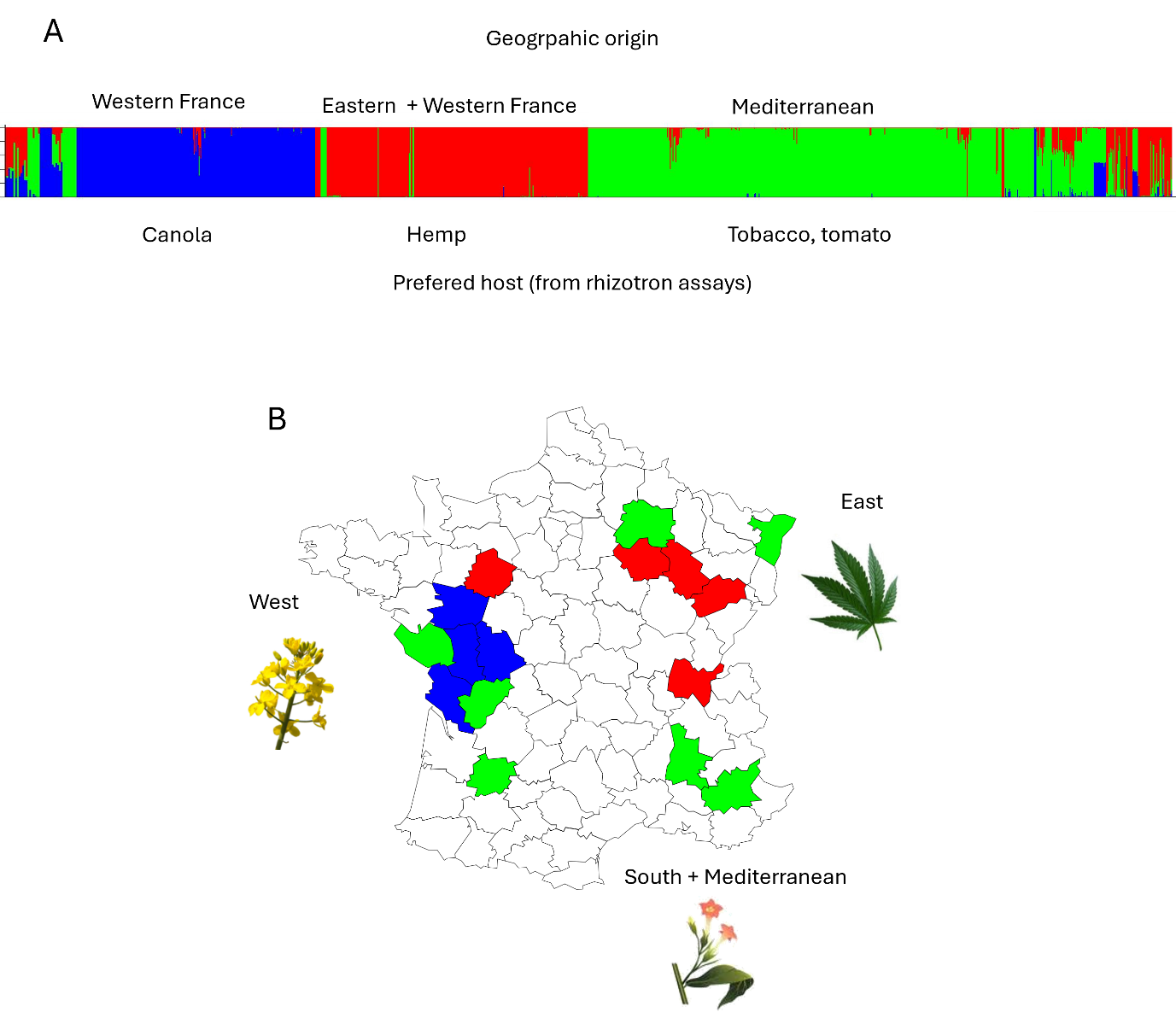
To assess the distribution of different genotypes along geographic and host plant gradients of P. ramosa I genotyped over 100 populations of P. ramosa harvested on various crops using SSR markers. I then tested host preference in rhizotrons for a representative core collection of 15 populations. I identified three highly homozygous genetic groups with distinct host preferences and life cycles. Type 1 had restricted distribution in western France and adapted to canola as host by extending its life cycle, so it matches the winter annual cycle of canola. This is the most recently emerged host race, coinciding with the introduction of canola cultures in western France in the 1980s. Type 2a was found mostly in eastern France, with preference for hemp as main host. Type 2b had a broad distribution, with overall good performance on all hosts, but some preference for hosts of the Solanaceae family.