
Looking for cowslips
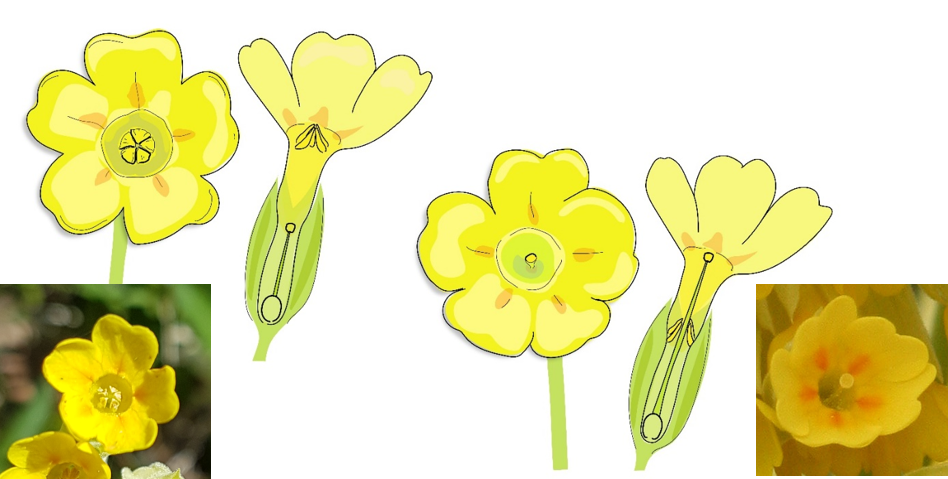
Heterostylous plants such as Primula veris have two floral morphs with different and reciprocate positions of the anther and stigma, which facilitate pollen transfer between morphs, and hinder it within morphs, thus favoring cross-pollination. Cross-pollination is further favored by morph self-incompatibility. In a population at equilibrium, isoplethy (equal frequencies of each morph) is expected, because it maximises average fitness in the population. Disturbance events, such as population fragmentation which can cause stochastic morph frequency variation and thus limit the availability for suitable mating partners in a population. Coupled with effects of climate change that affect plants and pollinators alike, deviations from isoplethy may thus impose an increased threat to plants with complex mating systems, such as heterostyly.
The citizen science campaign Looking for Cowslips gathered data about the distribution of floral morphs in P. veris. Between 2021 and 2022, the campaign gathered data on over 8000 locations across Europe thanks to the contribution of local campaign managers coordinated by the research team of T. Aavik at the University of Tartu, Estonia. The results expectedly showed that deviation from isoplethy is more pronounced in smaller populations that are more susceptible to genetic drift. Surprisingly, the direction of the deviation was not random, and populations with excess of the short-styled morph prevailed across Europe. The deviation in favor of the short-styled morph was more pronounced closer to urban areas, and in populations with higher precipitation. These results open the question about possible fitness advantage of the short styled morph that would favor its distribution, but also about the relationship between P. veris and its pollinators, especially in the context of climate change that would modify precipitation patterns.
I was involved in the campaign as National Coordinator for North Macedonia. All national coordinators were given a starting communication package with social media posts, graphics, and press releases that they could distribute through their own networks, and were offered monthly group consultations with the PR expert of the campaign. The local implementation of the campaign was left at their discretion.
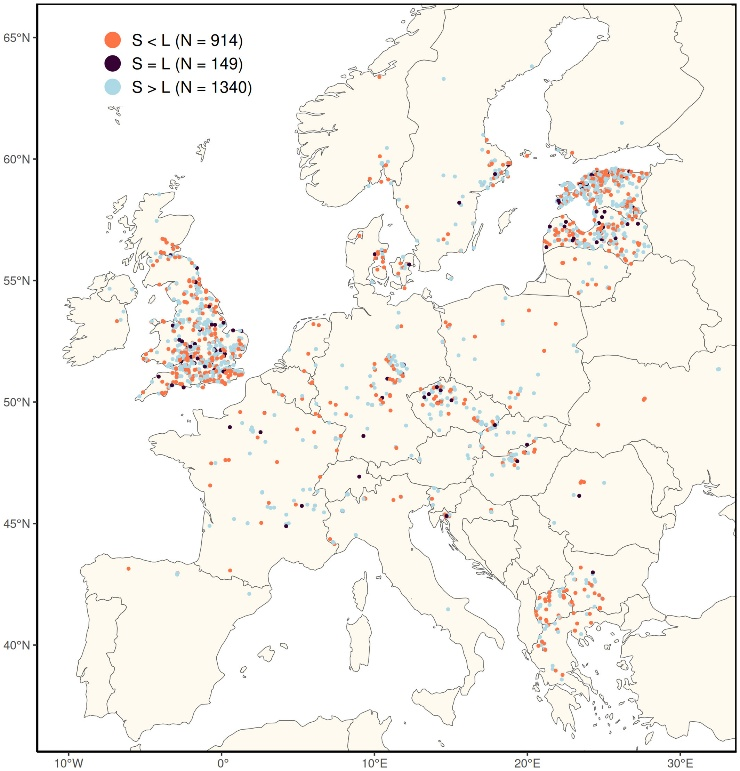
As a national coordinator, I integrated the Looking for Cowslips campaign in the Science for Children education platform. This resulted in a twofold benefit – recruitment of participants was facilitated by reaching out to the followers of the Science for Children platform, and on the other hand, Looking for Cowslips provided educational material (1, 2, 3, 4) about plant reproduction and biodiversity conservation for Science for Children. The 2022 campaign had an even broader span of activities, organized in the scope of the “Spring of cowslips” event. The outcome of this huge communication and education effort was visible in the results of the campaign – North Macedonia, being one of the smallest European countries with a population of 2 million, was among the top 10 contributors of the campaign (Figure 1).