Minuartia smejkalii is an edaphic perennial plant endemic to the Czech Republic. The species’ already restricted habitat to serpentine soils in two natural reserves south of Prague was further fragmented and degraded by anthropogenic actions since the 1960s. The LIFE for Minuartia project’s main goal was to reinforce extant and restore extinct populations of M. smejkalii via habitat restoration, population demographic and genetic reinforcement from appropriate in situ and ex situ cultivated materials.
I was in charge of the conservation genetics aspect of LIFE for Minuartia which included:
assessing genetic variation and its distribution estimated from anonymous RADSeq markers among populations, regions, as well as among all Minuartia species present in the Czech Republic.
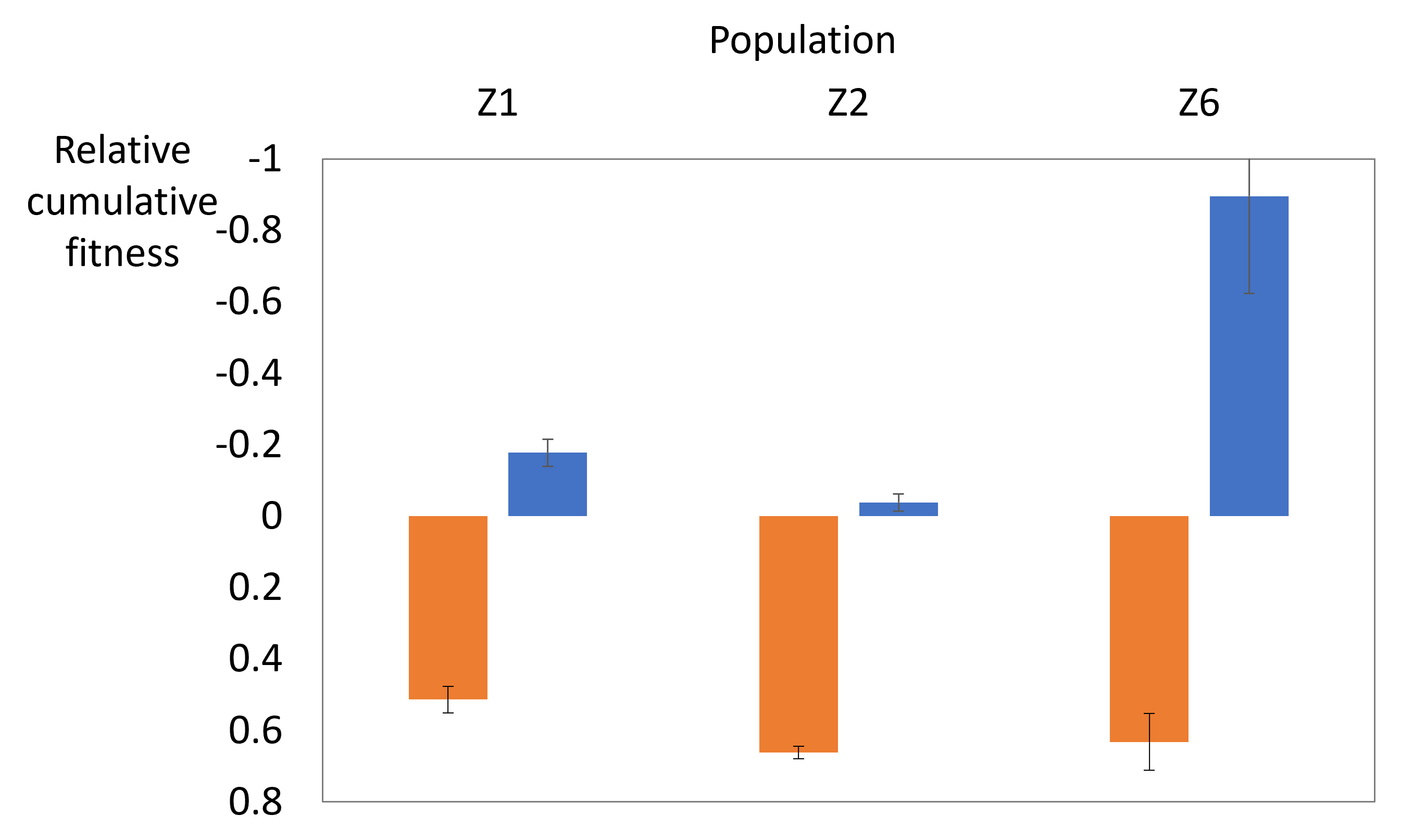
studying the occurrence of inbreeding depression, outbreeding depression and heterosis by comparing the fitness of inbred and outbred offspring produced from controlled pollinations and cultivated under different conditions.
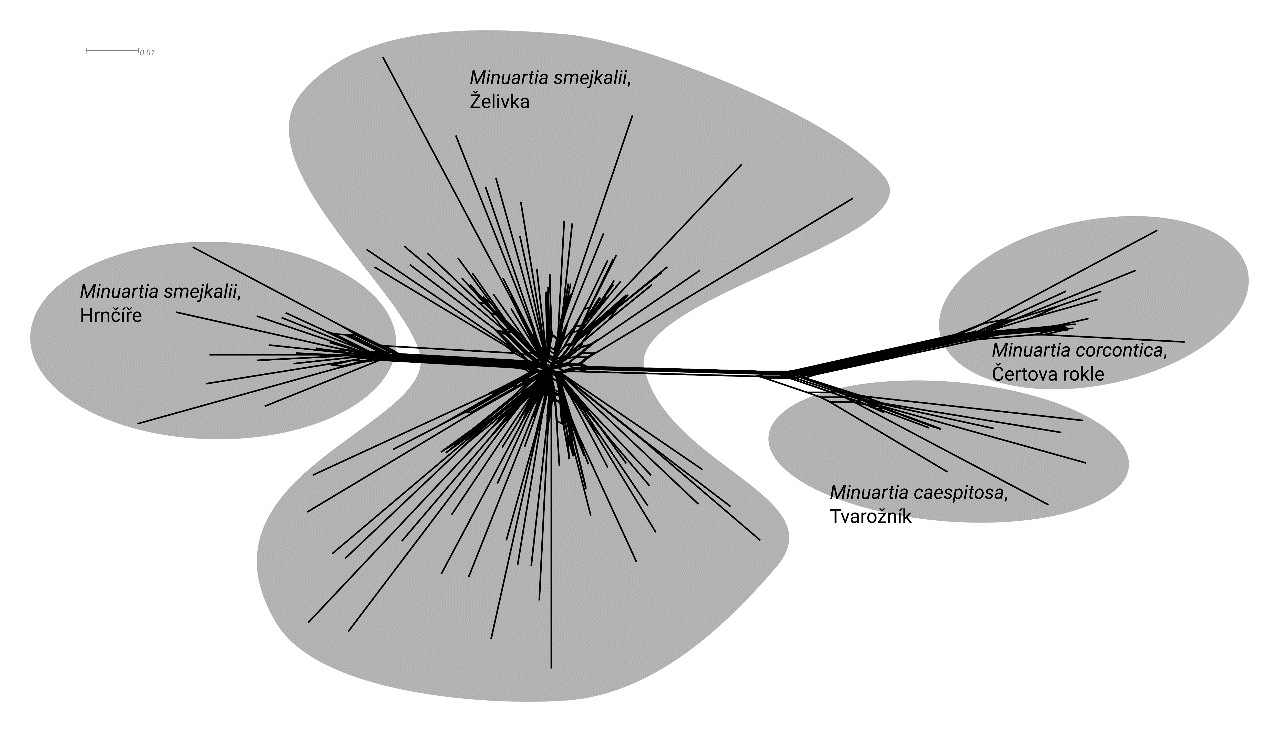
The results showed that M. smejkalii is genetically differentiated from other Minuartia taxa present in the Czech Republic.
Figure 1. Splits Tree analyses of Minuartia smejkalii collected in the only two extant locations of the species (Zelivka and Hrnicre), and the other two Minuartia species known to the Czech Republic (M. concortica and M. caespitosa)
Figure 2. Estimates of inbreeding depression (in orange) and outbreeding depression (in blue) for three populations of Minuartia smejkalii. Note the inversed y-axis. Large absolute values mean large inbreeding depression or heterosis, regardless of the sign. Inbreeding depression in particularly high in population Z6, which is an order of magnitude smaller than populations Z1 and Z2.
Moreover, intrapopulation genetic variation was high and inter-region variation was low, which could suggest gene flow between regions, or, more plausibly, a genetic lag due to the longevity of the species. Although the estimates varied between traits and environments, I detected high inbreeding depression in large populations, high heterosis in small populations, and low to no outbreeding depression. Altogether, these results offer an optimistic perspective for the conservation of the species which still presents significant genetic diversity and heterosis that can be used to introduce genotypes that will increase the adaptive potential of extant populations with minimal risk of breaking down adaptive complexes.